
- English
- Español
- Português
- русский
- Français
- 日本語
- Deutsch
- tiếng Việt
- Italiano
- Nederlands
- ภาษาไทย
- Polski
- 한국어
- Svenska
- magyar
- Malay
- বাংলা ভাষার
- Dansk
- Suomi
- हिन्दी
- Pilipino
- Türkçe
- Gaeilge
- العربية
- Indonesia
- Norsk
- تمل
- český
- ελληνικά
- український
- Javanese
- فارسی
- தமிழ்
- తెలుగు
- नेपाली
- Burmese
- български
- ລາວ
- Latine
- Қазақша
- Euskal
- Azərbaycan
- Slovenský jazyk
- Македонски
- Lietuvos
- Eesti Keel
- Română
- Slovenski
- मराठी
- Srpski језик

What Is the Difference Between a Manual and an Electric Stacker
Today, I’m applying that principle outside of search algorithms and into the world of material handling. As someone who has seen countless businesses optimize their operations, I understand that choosing the right equipment isn't just about specs—it's about solving real human problems. Many warehouse managers and logistics professionals stand at a crossroads, asking themselves a fundamental question: Should we invest in a manual stacker or an Electric Stacker? Having partnered with industry leaders to analyze efficiency data, I can tell you that this decision impacts daily productivity, operator well-being, and your bottom line. At HUGO, we’ve spent years refining both types of equipment, and the choice often boils down to understanding your unique workflow, challenges, and growth aspirations. Let’s break down this critical comparison, not with jargon, but with clarity.
What Exactly Are We Comparing
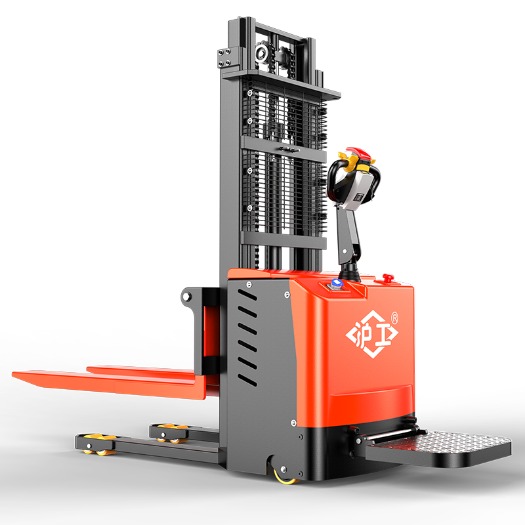
Before we dive into differences, let's define our terms. A manual stacker, as the name implies, relies entirely on human power for lifting and movement. It's a robust, straightforward tool, often seen as a workhorse for lighter or intermittent duties. An Electric Stacker, however, is powered by a battery and electric motors. It transforms the operator's role from a source of propulsion to a director of power. This isn't just a minor upgrade; it's a shift in how work gets done. The core distinction lies in the power source, but the implications ripple out to capacity, speed, operator fatigue, and total cost of ownership. At HUGO, we design both, so our perspective is centered on matching you with the perfect solution, not simply making a sale.
How Do Performance and Capabilities Truly Differ
This is where the rubber meets the road. Let's look at the tangible parameters that affect your team's day.
Lifting Capacity and Height
-
Manual Stacker: Typically handles loads from 500 kg to 1,500 kg. Lifting is achieved via a manual hydraulic pump, which requires physical effort and becomes noticeably slower at higher heights.
-
Electric Stacker: Designed for more demanding cycles. HUGO Electric Stacker models commonly range from 1,000 kg to 2,500 kg. The electric hydraulic system lifts loads smoothly and consistently to heights of several meters, with no increase in operator effort.
Travel and Lifting Speed
-
Manual Stacker: Travel speed is your walking pace. Lifting speed depends entirely on how fast the operator can pump the handle.
-
Electric Stacker: Here, efficiency soars. With a drive motor, an Electric Stacker allows for controlled travel speeds, often with multiple settings. Lifting is swift and on-demand via a thumb switch, compressing cycle times dramatically.
Ergonomics and Operator Strain
-
Manual Stacker: This is the primary pain point. Maneuvering and pumping, especially on uneven floors or with full loads, leads to quick fatigue. It's sustainable for short shifts or very light use.
-
Electric Stacker: The reduction in physical strain is the most significant advantage. The operator controls all functions with minimal effort, reducing injury risk and enabling sustained productivity over full shifts. This isn't just a machine benefit; it's a human one.
Let's encapsulate this in a clear, professional table:
Table 1: Core Performance Comparison
| Feature | Manual Stacker | HUGO Electric Stacker |
|---|---|---|
| Power Source | Human Force | Rechargeable Battery & Electric Motors |
| Typical Capacity | 500 - 1,500 kg | 1,000 - 2,500 kg |
| Lifting Mechanism | Manual Hydraulic Pump | Electro-Hydraulic Power Pack |
| Operator Effort | High (Pumping & Pushing) | Low (Control via Switches) |
| Ideal Use Case | Low-frequency, light-duty, tight budgets | Medium to high-frequency, longer shifts, heavy loads |
What About Cost and Long-Term Investment
The upfront price tag is often the first consideration, but a truly professional assessment looks at the total cost of ownership (TCO).
Initial Purchase Price
-
Manual Stacker: Clearly wins on lower initial investment. It's a CapEx-friendly option.
-
Electric Stacker: Requires a higher initial outlay, which covers the battery, motors, and advanced control systems.
Operational and Lifetime Costs
This is where the narrative flips. Consider these factors:
-
Labor Efficiency: An Electric Stacker can move more pallets per hour with less fatigue. What is the value of that increased throughput?
-
Physical Fatigue: Reduced strain means lower absenteeism, fewer workplace injuries, and higher morale.
-
Maintenance: Manual stackers have fewer components but can suffer from hydraulic seal wear from aggressive pumping. Electric Stacker models require battery care and periodic checks on electrical components, but their systems are designed for durability under load.
Table 2: Total Cost of Ownership Perspective
| Cost Factor | Manual Stacker | HUGO Electric Stacker |
|---|---|---|
| Initial Investment | Low | Moderate to High |
| Labor Cost Impact | Higher (Slower cycles, potential for fatigue-related downtime) | Lower (Higher throughput, sustained operator performance) |
| Energy Cost | N/A | Low (Cost of electricity for battery charging) |
| Longevity | Good, with proper maintenance | Excellent, with robust construction and battery management systems |
| Return on Investment | Quick, but limited by capability | Higher over time due to productivity gains and operational savings |
The question becomes: Are you buying a price, or are you investing in a productivity tool? For operations with more than a few lifts per hour, the Electric Stacker often proves more economical over a 2-3 year period.
Which One Is the Right Fit for My Operation
Ask yourself these questions:
-
What is our daily lift frequency? (Under 50 lifts/day might lean manual; over 100 strongly suggests electric.)
-
What are the full shift lengths for our operators?
-
Do we have any inclines or uneven flooring in our facility? (An Electric Stacker handles these with ease.)
-
Is our goal to simply move pallets, or to optimize workflow and grow capacity?
A HUGO manual stacker is a superb, reliable tool for specific, low-volume scenarios. But if your business faces challenges like labor shortages, high turnover due to physically demanding jobs, or a need to do more with your existing team, then the argument for electrification becomes compelling. The modern Electric Stacker is a solution to these very human and business-centric problems.
What Are the Most Common Questions About Electric Stackers
Let's address some frequent queries I've encountered, presented in a clear FAQ format.
How long does the battery last on a HUGO Electric Stacker, and how do I charge it
Our Electric Stacker models are equipped with industrial-grade deep-cycle batteries. On a single charge, they typically provide a full 8-hour shift of standard use. Charging is as simple as plugging the built-in charger into a standard outlet overnight. We also offer fast-charge and opportunity-charge options for multi-shift operations.
Is an Electric Stacker difficult to maintain compared to a manual one
Not at all. While the systems are more advanced, maintenance is straightforward. The key tasks involve regular battery watering (for specific types), keeping the unit clean, and periodic checks by a technician. The electric motors and hydraulic power pack require far less day-to-day attention than the manual pump mechanism, which is prone to wear from operator strain. HUGO provides clear maintenance guides and accessible service support.
Can an Electric Stacker be used in cold storage or sensitive environments
Absolutely. Many of our Electric Stacker units can be specified with cold storage packages, including special lubricants, materials resistant to condensation, and high-performance batteries designed to operate efficiently in low-temperature environments. They are excellent for food processing or pharmaceutical applications where consistent performance is critical.
Where Can I Find More Information and Personalized Advice
Reading comparisons is a great start, but I know from my years in tech that the best solutions come from collaboration. Your operation has its own rhythm, challenges, and goals. The true difference between a manual and an Electric Stacker isn't just on a spec sheet—it's measured in the relief of an operator's back at the end of a shift, in the extra orders shipped before lunch, and in the scalability of your growing business.
At HUGO, we don't just sell equipment; we partner with you to analyze your workflow and recommend the precise tool for the job. Whether the robust simplicity of a manual stacker or the transformative efficiency of an Electric Stacker is right for you, we have the expertise and the product range to support your decision.
Contact us today. Let's schedule a brief consultation. Share your pallet weights, your shift patterns, your floor layout, and your aspirations. Our team will provide a data-backed, human-centric recommendation to help you move forward with confidence. Reach out now and let's optimize your next move together.