
- English
- Español
- Português
- русский
- Français
- 日本語
- Deutsch
- tiếng Việt
- Italiano
- Nederlands
- ภาษาไทย
- Polski
- 한국어
- Svenska
- magyar
- Malay
- বাংলা ভাষার
- Dansk
- Suomi
- हिन्दी
- Pilipino
- Türkçe
- Gaeilge
- العربية
- Indonesia
- Norsk
- تمل
- český
- ελληνικά
- український
- Javanese
- فارسی
- தமிழ்
- తెలుగు
- नेपाली
- Burmese
- български
- ລາວ
- Latine
- Қазақша
- Euskal
- Azərbaycan
- Slovenský jazyk
- Македонски
- Lietuvos
- Eesti Keel
- Română
- Slovenski
- मराठी
- Srpski језик

How Can the Right Pallet Jack Improve Safety and Productivity in Material Handling?
Article Summary
A pallet jack may look like a basic tool, but choosing the wrong one can lead to damaged goods, operator fatigue, wasted time, and higher maintenance costs. This article explains what buyers should really look for before selecting a pallet jack, from load capacity and fork dimensions to wheel material, floor conditions, and operating frequency. It also breaks down the differences between manual and electric models, highlights common purchasing mistakes, and shows how a well-matched pallet jack can make warehouse handling safer, faster, and more predictable. For businesses looking for dependable handling equipment, understanding these details is the first step toward a smarter investment.
Contents
- 1. Article Outline
- 2. Why does pallet jack selection matter more than many buyers expect
- 3. What problems can the wrong pallet jack create
- 4. Which factors should buyers check before choosing a pallet jack
- 5. Is a manual or electric pallet jack better for your operation
- 6. What industries benefit most from a reliable pallet jack
- 7. How can a dependable supplier reduce long-term risk
- 8. What should be on your purchasing checklist
- 9. FAQ
- 10. Final thoughts
Article Outline
- Why pallet jacks remain essential in daily material handling
- The hidden costs of choosing an unsuitable model
- Core buying factors including capacity, fork size, wheel type, and environment
- Manual versus electric options for different workflows
- Industry use cases and practical selection guidance
- The value of supplier stability, quality consistency, and after-sales support
- A clear checklist for buyers comparing multiple options
Why Does Pallet Jack Selection Matter More Than Many Buyers Expect?

In many warehouses, workshops, retail backrooms, and logistics hubs, the pallet jack is the piece of equipment people touch every day but rarely think about until something goes wrong. It is often seen as a basic purchase, which is exactly why many businesses underestimate its impact. When the model fits the workload, it quietly improves movement speed, reduces physical strain, supports cleaner traffic flow, and helps goods arrive at the next step in better condition. When it does not fit, the problems show up everywhere at once.
A pallet jack is not only about lifting a pallet a few centimeters from the ground. It is part of the rhythm of the operation. It influences how quickly products move from receiving to storage, from storage to picking, and from production to shipping. A poor choice can slow down operators on every trip. Even if the delay on one move seems minor, the accumulated effect over weeks and months is significant.
This is why buyers should approach pallet jack selection as an operational decision rather than a simple commodity purchase. The right tool should match pallet size, aisle width, floor condition, product weight, movement distance, and operator workload. It should also be durable enough to stay reliable under real working conditions rather than ideal ones.
What Problems Can the Wrong Pallet Jack Create?
Many customer frustrations start long before a pallet jack actually fails. Sometimes the issue is constant drag on rough floors. Sometimes it is forks that do not slide in smoothly. In other cases, the unit handles the rated load on paper but feels unstable in practice. These daily annoyances become operational pain points because they waste time, reduce confidence, and create avoidable risk.
Common pain points caused by a poor pallet jack choice include:
- Operators needing extra force to move standard loads
- Frequent wheel wear on uneven or abrasive floors
- Fork length or width mismatching pallet dimensions
- Hydraulic lifting that feels inconsistent or weak
- More product damage during internal transport
- Lower productivity during peak handling hours
- Higher maintenance costs and more downtime
One of the most overlooked issues is operator fatigue. A pallet jack may be manually powered, but that does not mean it should feel heavy in use. If a worker has to fight the equipment all day, the cost is not only slower movement. It can also lead to repetitive strain, careless turns, and reduced attention during busy shifts. For businesses that care about consistent handling quality, this should not be treated as a minor detail.
A pallet jack that looks acceptable in a quotation sheet may still perform poorly in a real warehouse if the floor, travel distance, and pallet type were never properly considered.
Which Factors Should Buyers Check Before Choosing a Pallet Jack?
Before comparing prices, buyers should understand the actual handling scenario. A good selection process starts with the work, not the catalog. That means looking at what is being moved, how often it is moved, where it is moved, and who is moving it.
Here are the key factors worth checking first:
- Load capacity: The rated capacity should cover real working loads with an appropriate margin.
- Fork dimensions: Fork length and width should match the pallet type used on site.
- Lifting range: The minimum and maximum fork height should suit loading and unloading needs.
- Wheel material: Nylon, polyurethane, and rubber perform differently depending on floor conditions.
- Turning space: Tight aisles demand smooth steering and a compact profile.
- Usage frequency: A unit used all day needs stronger construction than one used occasionally.
- Environment: Food processing, pharmaceuticals, damp conditions, or corrosive areas may require special materials.
| Selection Factor | Why It Matters | Buyer Risk If Ignored |
|---|---|---|
| Load Capacity | Ensures the pallet jack can safely support typical cargo weight | Overloading, instability, shorter service life |
| Fork Size | Determines compatibility with pallet structure and working space | Jamming, poor entry, handling inefficiency |
| Wheel Material | Affects traction, noise, floor protection, and rolling resistance | Fast wear, noisy movement, difficult pulling |
| Hydraulic Performance | Supports smooth lifting and lowering under load | Interrupted workflow, operator frustration |
| Build Quality | Influences durability in repeated daily use | More repairs, downtime, inconsistent performance |
| Operating Environment | Helps match the model to hygiene, moisture, or corrosion demands | Premature damage, unsuitable equipment choice |
Buyers should also think ahead. Today’s pallet handling demand may not be the same six months from now. If the warehouse is expanding or product volume is rising, it can make sense to select a pallet jack that is ready for heavier use instead of choosing only for current minimum demand.
Is a Manual or Electric Pallet Jack Better for Your Operation?
This is one of the most common questions buyers ask, and the answer depends on workload rather than preference. Manual pallet jacks remain a practical choice for light to moderate handling, shorter travel distances, and facilities where budget control matters. They are simple, widely used, and easy to integrate into daily work.
Electric pallet jacks become more attractive when the workload is heavier, the travel distance is longer, or the handling cycle is more frequent. In these cases, reducing operator effort can improve consistency and help maintain output across long shifts.
| Type | Best For | Main Advantage | Main Consideration |
|---|---|---|---|
| Manual Pallet Jack | Short-distance movement, smaller warehouses, lighter daily intensity | Lower initial cost and simple operation | More physical effort during repeated use |
| Electric Pallet Jack | High-frequency handling, longer runs, larger facilities | Higher efficiency and less operator fatigue | Higher initial investment and battery management |
For many businesses, the decision is not about which type is universally better. It is about which type supports the real workflow with less friction. A smaller site handling moderate pallet movement may get excellent value from a well-built manual pallet jack. A busier logistics environment may recover the higher cost of an electric unit through labor savings and smoother internal movement.
What Industries Benefit Most From a Reliable Pallet Jack?
The usefulness of a pallet jack extends far beyond warehousing alone. Any operation that needs stable, repeatable, low-level pallet movement can benefit from the right model. What changes from industry to industry is the emphasis placed on hygiene, corrosion resistance, maneuverability, or durability.
Typical applications include:
- Warehouses and fulfillment centers handling daily inbound and outbound pallets
- Manufacturing plants moving raw materials and finished goods between stations
- Retail distribution centers managing bulk stock transfers
- Food and beverage facilities requiring cleanable and reliable handling equipment
- Pharmaceutical and healthcare environments where material movement must be controlled and dependable
- Cold storage and humid settings where material choice affects equipment lifespan
This is where supplier understanding becomes valuable. A supplier that offers more than one type of pallet jack can help buyers compare options based on actual use conditions instead of forcing one generic recommendation. Shanghai Yiying Crane Machinery Co., Ltd., for example, is active in lifting and material-handling equipment, and that kind of product background matters when buyers need solutions that fit different operational settings rather than a one-size-fits-all answer.
How Can a Dependable Supplier Reduce Long-Term Risk?
Buyers often compare unit price first, but long-term value depends on more than the quotation. A dependable supplier can reduce risk by offering stable product quality, clearer specifications, more consistent manufacturing, and better communication before and after purchase. This matters especially for importers, distributors, and industrial buyers who need equipment they can trust across repeated orders.
A reliable supplier should be able to explain what distinguishes one pallet jack from another in practical terms. That includes frame strength, hydraulic design, wheel options, finish quality, application range, and whether customization is available. It also helps when the supplier understands global shipping expectations, documentation needs, and lead-time consistency.
Good sourcing is not just about finding a seller. It is about finding a partner that makes future orders easier, clearer, and less risky. That is especially important when pallet jacks are being purchased not as one-off tools, but as recurring equipment for warehouses, dealers, or equipment programs.
What Should Be on Your Purchasing Checklist?
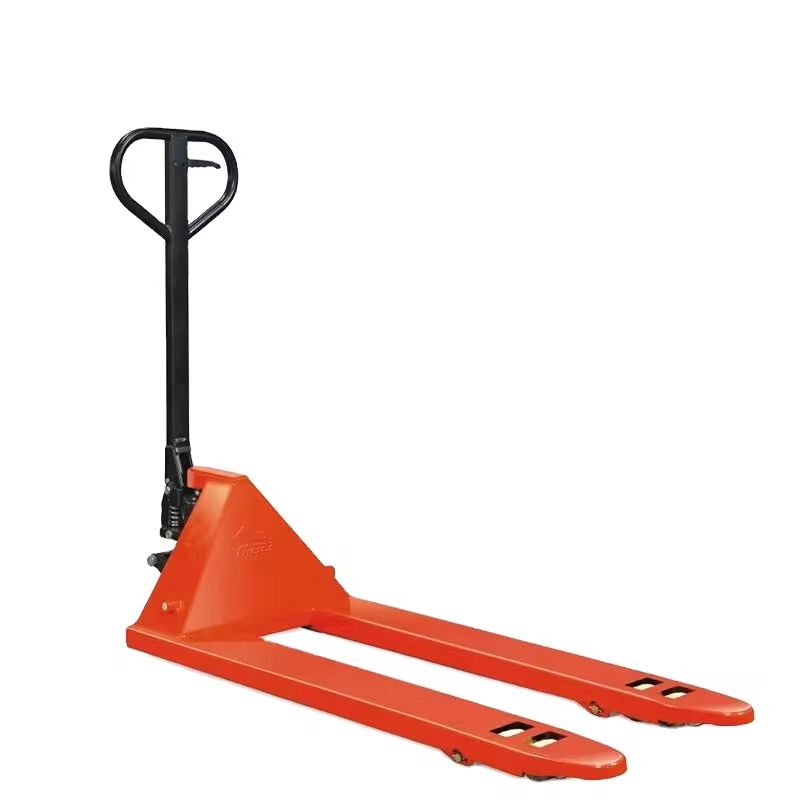
If buyers want a cleaner comparison process, a structured checklist is one of the easiest ways to avoid a costly mismatch. Instead of asking only for price, ask for performance fit.
Simple pallet jack purchasing checklist:
- Confirm maximum and average pallet load
- Check pallet dimensions and entry style
- Measure aisle width and turning limitations
- Evaluate floor smoothness, slope, and surface condition
- Decide whether manual or electric operation is more suitable
- Review wheel material options based on environment
- Ask about hydraulic durability and wear components
- Confirm whether special environments require stainless or other protective materials
- Check lead time, packaging, and after-sales response
- Compare long-term reliability, not only purchase price
A thoughtful buying process usually leads to fewer complaints later. It also makes internal approval easier because the decision is based on operating logic rather than guesswork. When the equipment is chosen with real conditions in mind, the result is smoother handling, fewer interruptions, and better day-to-day confidence for operators.
FAQ
What is the main purpose of a pallet jack?
A pallet jack is used to lift and move palletized goods over short distances. It helps reduce manual carrying, improves workflow, and supports safer handling in warehouses, workshops, and distribution environments.
Which is better for small warehouses, a manual or electric pallet jack?
In many small warehouses, a manual pallet jack is often enough if the loads are moderate and the travel distance is short. Electric models are more suitable when handling is frequent or labor intensity is high.
What load capacity should I choose for a pallet jack?
Buyers should choose a model based on actual working loads rather than occasional assumptions. It is safer to select a pallet jack that comfortably supports routine use conditions with some margin.
Why does wheel material matter so much?
Wheel material affects how easily the pallet jack rolls, how much noise it creates, how it behaves on different floors, and how quickly it wears out. The wrong wheel can make handling noticeably harder.
Can pallet jacks be used in food or humid environments?
Yes, but the model and material should match the environment. In clean, damp, or corrosion-sensitive settings, buyers should look for options designed for those conditions.
Final Thoughts
The right pallet jack does more than move goods. It supports smoother workflows, improves operator comfort, lowers avoidable damage, and helps businesses keep internal handling under control. That is why buyers should evaluate the application carefully instead of treating every pallet jack as the same product.
If you are comparing models for warehouse handling, workshop transport, or distribution use, choosing a supplier with real product understanding can make the decision much easier. To discuss the right pallet jack solution for your application, contact us and explore options that match your load, layout, and operating requirements.